The day after the day after tomorrow is certainly the last day of the year, and, according to most, the last day of the decade. Because it is fun, this has got people to wonder what the Best (Book/Movie/TV Program/Album) of the arbitrary period of time has been. And, in just before the gate closes, it's time to do just that here at unpacking my library.
First, the best book of the year was, I have no idea. I have read I think two and a half books published this year, and they were fine. I think that the larger commitment of time and mental energies that books demand results in their being less plausible than movies and music to being the accoutrements of a particular year. Everybody listened to Funeral by Arcade Fire in 2004, because that's when it came out; but everybody read the Time Traveler's Wife when it came out, or when it came out in paperback, or when it was optioned for a movie or after they saw the movie or when they had time to kill at Logan Airport on Christmas Eve 2007. It's just a more drawn-out thing. The only book I can at all remember associating with a particular time is The Corrections (on which more below!), which was a Big Deal in pre-September 2001, and even that was more to do with a television hoopla than with the book itself. So the best book of the year is best talked about not the way we pick a Best Picture, but more as a sort of suggestion: the best thing that I happened to have read this year rather than another year. For me, that was probably the Sound and the Fury. Boring, but oh well.
Decades, on the other hand, are long and slow enough to let books be the kind of thing that, retrospectively at least. It makes sense to try to order how we understand the past by awarding some books The Book of the Decade status. Infinite Jest, for example, jumps out as The Book of the Nineties; maybe On the Road or the Catcher in the Rye for The Book of the Fifties? The Dudebrodogman has even suggested that books can be The Book of a Decade without even being published in that decade, in which case his vote for American Psycho would beat out mine for Bright Lights Big City as The Book of the Eighties. So maybe the Book of the Aughts won't get written for another five years or so; but until then, who are our contenders? Here are my ideas, in no particular order.
1) The Brief Wondrous Life of Oscar Wao -- this got the vote of New York Magazine, and one can see why. Of the books I've thought about, it has the form best suited to a claim of representing, somehow, the millennial attitude toward the presentation of information.
2) The Corrections -- this one was the best book of the Aughts according to themillions, and, again, it has a lot of prestige and such. I personally was underwhelmed by the whole thing, but am willing to hear arguments contra.
3) The Road -- this is one of the two Gloom and Doom contenders, because really, the decade was pretty gloomy and more than a little doomy. It's a spare kind of g&d, as many of you know, since it was our ill-advised first pick for Book of the Book Club.
4) 2666 -- and here's some of the other kind of Gloom and Doom. I actually think this would be a better Book of the Aughts than the Road, because its sense of vaguely defined menace also has the decade's particular style of overinformation and overdetermined connections that's on display in the less apocalyptic Oscar Wao.
5) The Amazing Adventures of Kavalier and Clay -- and one for the optimists. I think that this could make its case for being the Book of the Aughts the same way in which Gravity's Rainbow could make a case for being the Book of the Seventies. They both use raw matter from actual history, refashioned in their own time.
6) The Tipping Point -- this is probably really the Book of the Aughts, because the most people read it, and it gets taught in seminars and such and isn't fiction. I guess I spent too little time reading non-fiction in the past ten years; I guess I'll have to shape up.
Showing posts with label Listicle. Show all posts
Showing posts with label Listicle. Show all posts
Tuesday, December 29, 2009

Friday, August 7, 2009
More on Rock Bands
Today is Friday, here's a list.
TOP FIVE BANDS/MUSICAL ACTS FROM BOOKS WHOM I WISH WERE REAL
5) The Weird Sisters, from Harry Potter -- Ok, I know they already kind of real, by virtue of being played in the fourth Harry Potter movie by half of Pulp and 2/5 of Radiohead. But that has to be recommendation enough to get them on a list of imaginary bands, right? And, the Do the Hippogriff song is good. It's sounds like it's by Jarvis Cocker, which it is, and that is sufficient for my imaginary band purposes, at least. They are described as "extremely hairy and dressed in black robes that had been artfully ripped and torn" and apparently have names like Heathcote Barbary and Orsino Thruston and Gideon Crumb (which last plays the bagpipes). So yeah, I would have had a 10" by 20" poster of these guys, if they were real.
4) Ormus Cama and Vina Aspara -- These ones are on here largely because of curiosity as to all the people they wouldn't be. Ormus Cama is one third John Lennon, one third Elvis, and one third Freddie Mercury, but he lives in a world in which Elvis has somehow ripped off the music that he has been hearing psychically. It's kind of confusing. And Vina is his muse, so she'd have to come too. One of the most interesting thing's we'd learn from these people, if they were real, is what fem-Lou Reed is like, because in The Ground Beneath Her Feet, Lou Reed is a woman: when his ghost twin Gayomart tells him about how weird the other world he's visited is, it's ours, and one of the things about which he is shocked is that Lou's a dude here. Fascinating.
3) Mary Bennet -- Poor Mary. All she does in Pride and Prejudice is bum everyone out, by being plain and wanting to talk about god. However, she is apparently quite gifted at the piano. She could be like a frumpier Glenn Gould! And I always feel bad for her, so she gets on the list.
2) Ok so for this one, I was going to put on Bucky Wunderlick, the pseudo-Bob Dylan from Great Jones Street, but do you know what? I didn't really like Great Jones Street. And anyway, Bob Dylan is barely real anyway, so I'll just throw him on the list his own personal self. From Chronicles, Vol. 1.
1) the Paranoids -- It had to be them, right? The goofball, fake-British invasion house band from Paranoid Mess The Crying of Lot 49 are awesome. They party at least as hard as any band in fiction, or probably real life, and they say funnier cryptically literate things than any band in real life except maybe Radiohead. They seem to sound like the Kinks when the Kinks were only loud, and their lyrics bounce around between sounding like they're by Jack Kerouac and like they're by John Donne. Just the best of both worlds, with this guys. I have an Axis: Bold as Love t-shirt that I wear and always feel self-conscious about, because I feel as if I don't know Jimi Hendrix's work well enough to justify it. And that is exactly the situation I can imagine myself in with regard to the Paranoids.
TOP FIVE BANDS/MUSICAL ACTS FROM BOOKS WHOM I WISH WERE REAL
5) The Weird Sisters, from Harry Potter -- Ok, I know they already kind of real, by virtue of being played in the fourth Harry Potter movie by half of Pulp and 2/5 of Radiohead. But that has to be recommendation enough to get them on a list of imaginary bands, right? And, the Do the Hippogriff song is good. It's sounds like it's by Jarvis Cocker, which it is, and that is sufficient for my imaginary band purposes, at least. They are described as "extremely hairy and dressed in black robes that had been artfully ripped and torn" and apparently have names like Heathcote Barbary and Orsino Thruston and Gideon Crumb (which last plays the bagpipes). So yeah, I would have had a 10" by 20" poster of these guys, if they were real.
4) Ormus Cama and Vina Aspara -- These ones are on here largely because of curiosity as to all the people they wouldn't be. Ormus Cama is one third John Lennon, one third Elvis, and one third Freddie Mercury, but he lives in a world in which Elvis has somehow ripped off the music that he has been hearing psychically. It's kind of confusing. And Vina is his muse, so she'd have to come too. One of the most interesting thing's we'd learn from these people, if they were real, is what fem-Lou Reed is like, because in The Ground Beneath Her Feet, Lou Reed is a woman: when his ghost twin Gayomart tells him about how weird the other world he's visited is, it's ours, and one of the things about which he is shocked is that Lou's a dude here. Fascinating.
3) Mary Bennet -- Poor Mary. All she does in Pride and Prejudice is bum everyone out, by being plain and wanting to talk about god. However, she is apparently quite gifted at the piano. She could be like a frumpier Glenn Gould! And I always feel bad for her, so she gets on the list.
2) Ok so for this one, I was going to put on Bucky Wunderlick, the pseudo-Bob Dylan from Great Jones Street, but do you know what? I didn't really like Great Jones Street. And anyway, Bob Dylan is barely real anyway, so I'll just throw him on the list his own personal self. From Chronicles, Vol. 1.
1) the Paranoids -- It had to be them, right? The goofball, fake-British invasion house band from Paranoid Mess The Crying of Lot 49 are awesome. They party at least as hard as any band in fiction, or probably real life, and they say funnier cryptically literate things than any band in real life except maybe Radiohead. They seem to sound like the Kinks when the Kinks were only loud, and their lyrics bounce around between sounding like they're by Jack Kerouac and like they're by John Donne. Just the best of both worlds, with this guys. I have an Axis: Bold as Love t-shirt that I wear and always feel self-conscious about, because I feel as if I don't know Jimi Hendrix's work well enough to justify it. And that is exactly the situation I can imagine myself in with regard to the Paranoids.
Thursday, April 23, 2009
Happy Shakespeare's Birthday!
Happy Shakespeare's Birthday, everyone! One of the seventh-graders whom I was substitute teaching today asked, when I had written that on the chalkboard, shouldn't I have written Happy Birthday, Shakespeare. Well, no, because he is dead and anyway it's a happy occasion for us, not just for him. Not even for him, now that he is dead. Anyway here is a Birthday Listicle for my man Shakespeare, of the top four quotes that I think celebrate the big 4-4-5.
Oh, also, I think "Talk Like Shakespeare" day is kind of silly unless you take it WAY EXTREME and start using real, pre-vowel shift, clipped jabbering instead of just saying "sirrah" and "neither a borrower nor a lender be". I don't think that part of "talking like Shakespeare" is the same as "quoting unnecessarily and stupidly". We'll save that for talk like Polonius day.
4)"Thou must be patient; we came crying hither:
Thou know'st, when we first smell the air
We wawl and cry..........................
When we are born, we cry that we are come
To this great stage of fools." -- King Lear
So, right of the bat, a downer. Someone, I think Cavell, points out that, uh, Shakespeare, that's not really why we cry when we're born. But still. On your birthday, you can feel that way. I used to refuse to celebrate my birthday, because if you made up a ledger with all of my woes on it, I was doing a lot better pre-birth than post-birth, and didn't want to celebrate just the start of all my troubles. But with the right inflection, you can be a good stoic on your birthday by reminding yourself that indeed, we came crying hither.
3)"And tell the pleasant prince this mock of his
Hath turn'd his balls to gun-stones." -- King Henry V
This one is a little testy, too, and I'm not totally sure that the tennis balls that the Dauphin sends Henry (for laffs) are a birthday present (in fact, I'm almost positive they're not). But this is a useful one for the Shakespeare-birthday quote arsenal, to trot out if anyone's gag gift incites you to invade their country while claiming the benefit of Salic law.
2) The First Twelve Lines of Sonnet XXX
I like this one -- it's the "When to the sessions of sweet silent thought/I summon up remembrance of things past" one -- not just because it's a little Prousty (a lot Prousty for anglophones), but also because it has the kind of grim account taking that I imagine one does on one's birthday. The last lines, though, I feel are a little soppy. This one's kind of a downer, too, like the first one; but like I said, with the woe-ledger, I generally get down (sad down, not boogie-down) about birthdays.
1) "When I was about thy years, Hal, I was not an eagle's talon in the waist; I could have crept into any alderman's thumb-ring: a plague of sighing and grief! it blows up a man like a bladder."--Falstaff
So, sad about anyone's birthday? Nothing will cheer you up out of that faster than Falstaff. After all the mopery of the proceeding, I laughed several times reading the post-Gad's Hill robbery scene, the one whence this quote. One of the best things available to us on our birthdays -- other than the impulse to pwn your Salic enemies -- is to look back and reward ourselves not just with the "fore-bemoaned moan" from the sonnet, but also with, what the hell, a vision of your life as you'd have liked it to be. Falstaff is an expert at that, and on Shakespeare's birthday and our own birthdays, we can choose to remember the times that we could have crept into any alderman's thumb-ring, because why not.
Oh, also, I think "Talk Like Shakespeare" day is kind of silly unless you take it WAY EXTREME and start using real, pre-vowel shift, clipped jabbering instead of just saying "sirrah" and "neither a borrower nor a lender be". I don't think that part of "talking like Shakespeare" is the same as "quoting unnecessarily and stupidly". We'll save that for talk like Polonius day.
4)"Thou must be patient; we came crying hither:
Thou know'st, when we first smell the air
We wawl and cry..........................
When we are born, we cry that we are come
To this great stage of fools." -- King Lear
So, right of the bat, a downer. Someone, I think Cavell, points out that, uh, Shakespeare, that's not really why we cry when we're born. But still. On your birthday, you can feel that way. I used to refuse to celebrate my birthday, because if you made up a ledger with all of my woes on it, I was doing a lot better pre-birth than post-birth, and didn't want to celebrate just the start of all my troubles. But with the right inflection, you can be a good stoic on your birthday by reminding yourself that indeed, we came crying hither.
3)"And tell the pleasant prince this mock of his
Hath turn'd his balls to gun-stones." -- King Henry V
This one is a little testy, too, and I'm not totally sure that the tennis balls that the Dauphin sends Henry (for laffs) are a birthday present (in fact, I'm almost positive they're not). But this is a useful one for the Shakespeare-birthday quote arsenal, to trot out if anyone's gag gift incites you to invade their country while claiming the benefit of Salic law.
2) The First Twelve Lines of Sonnet XXX
I like this one -- it's the "When to the sessions of sweet silent thought/I summon up remembrance of things past" one -- not just because it's a little Prousty (a lot Prousty for anglophones), but also because it has the kind of grim account taking that I imagine one does on one's birthday. The last lines, though, I feel are a little soppy. This one's kind of a downer, too, like the first one; but like I said, with the woe-ledger, I generally get down (sad down, not boogie-down) about birthdays.
1) "When I was about thy years, Hal, I was not an eagle's talon in the waist; I could have crept into any alderman's thumb-ring: a plague of sighing and grief! it blows up a man like a bladder."--Falstaff
So, sad about anyone's birthday? Nothing will cheer you up out of that faster than Falstaff. After all the mopery of the proceeding, I laughed several times reading the post-Gad's Hill robbery scene, the one whence this quote. One of the best things available to us on our birthdays -- other than the impulse to pwn your Salic enemies -- is to look back and reward ourselves not just with the "fore-bemoaned moan" from the sonnet, but also with, what the hell, a vision of your life as you'd have liked it to be. Falstaff is an expert at that, and on Shakespeare's birthday and our own birthdays, we can choose to remember the times that we could have crept into any alderman's thumb-ring, because why not.
Thursday, January 15, 2009
Short Story COUNTDOWN
So here's another list you all like so much, this time of my favorite short stories. I am not, I think, a short story expert, because I've only read one short story by Chekhov and that was in ninth grade. But whatever, I'm not a Judy Blume expert or a Robert Herrick expert either, and lord knows that didn't stop me from talking about them. Top five:
6. Josephine the Singer, or, the Mouse Folk, by Franz Kafka -- So I think there are basically three kinds of short stories: short stories that basically do what novels do, but shortly; short stories that have a plot culminating in some sort of gimmick, like stories by O. Henry; and then there are stories like the ones by Kafka and Borges and Steven Millhauser, that are all gimmick and almost no plot. Like the one by Millhauser all about the town that is a copy of the town that the narrator lives in, or Tlon, Uqbar, Orbis Tertius, which is all about an encyclopedia. There is not really a plot, as such, to my favorite Kafka story, Josephine the Singer, or, the Mouse Folk. It is all about the one mouse, in the mouse community who wants to sing songs, and the slow-building resentment of the rest of the mice. It is a great slow burn, of mouse resentment, and it's weird, and, for Kafka, it's surprisingly undepressing. Or rather, still pretty depressing, but more depressing about mice than about us, which kind of lets us off the hook.
5. The Wonderful Story of Henry Sugar by Roald Dahl --This story absolutely freaked me out when I read it as a kid, because at one point, the narrator interrupts his story about a guy who uses yoga to see through the backs of cards and win money to tell you what might happen next, and what the narrator tells you is that Henry -- a slightly unscrupulous but generally charming guy -- may just look at himself in the mirror and see, with his yogic powers, a blood clot, and then fall over dead. What actually happens is that Henry becomes a philanthropist, and founds orphanages all over the place. Imagine being twelve and having this author butt in to tell you that his characters survive only because of his caprices, that he could at any minute blood clot any one of them, even the titular hero of his "wonderful story". Yikes. This one gets on the list on sheer oomph.
3. Interpreter of Maladies by Jhumpa Lahiri -- This is a pretty good example of the short story as a mini-novel: it's got an interesting, metaphor-ready situation (the main guy is a tour guide whose other job is translating diseases for a doctor who doesn't know English) and then a few hours' worth of emotionally charged plot. Not a lot "happens" happens, but with Lahiri's quiet prose, not a lot happens very very strikingly.
2. Menelaiad by John Barth -- This thing, which is seven levels of story going in and then seven more exploding out, is a bravura retelling of some of the events of the Iliad and the Odyssey, told by Menelaus. Of the stories on this list, except for the creepy authorial interlude in Henry Sugar, this one has the most going for it in terms of short story gimmick, what with its nested stories and classical references and such. And in the middle of all of that is the most plangent thing I think I've ever read -- in the middle of yet another narrative three-ring-circus about his slightly embarrassing marital life, Menelaus breaks through half a dozen layers of story to ask the reader, "Why don't they call her Helen of Sparta?" It there were ever a claim on which to hang my nerdy hat, ladies and gentlemen, there it is.
1. Spring in Fialta by Vladimir Nabokov -- The season is cloudy and dull, but the story is wonderful. This is not a short story that's built like a novel, but a short story built like someone talking to you about a novel. It is also elegaic and full of delightful sentences and remorseless analysis, which is why I like it so much. I think that it strikes a mood of elegy, in fact, that is uniquely suited to a short story -- such a novel would get maudlin, such poems have too much the element of performance about them (see Dr. Johnson on Lycidas, e.g.) -- and makes it my favorite instance of what a short story can do.
6. Josephine the Singer, or, the Mouse Folk, by Franz Kafka -- So I think there are basically three kinds of short stories: short stories that basically do what novels do, but shortly; short stories that have a plot culminating in some sort of gimmick, like stories by O. Henry; and then there are stories like the ones by Kafka and Borges and Steven Millhauser, that are all gimmick and almost no plot. Like the one by Millhauser all about the town that is a copy of the town that the narrator lives in, or Tlon, Uqbar, Orbis Tertius, which is all about an encyclopedia. There is not really a plot, as such, to my favorite Kafka story, Josephine the Singer, or, the Mouse Folk. It is all about the one mouse, in the mouse community who wants to sing songs, and the slow-building resentment of the rest of the mice. It is a great slow burn, of mouse resentment, and it's weird, and, for Kafka, it's surprisingly undepressing. Or rather, still pretty depressing, but more depressing about mice than about us, which kind of lets us off the hook.
5. The Wonderful Story of Henry Sugar by Roald Dahl --This story absolutely freaked me out when I read it as a kid, because at one point, the narrator interrupts his story about a guy who uses yoga to see through the backs of cards and win money to tell you what might happen next, and what the narrator tells you is that Henry -- a slightly unscrupulous but generally charming guy -- may just look at himself in the mirror and see, with his yogic powers, a blood clot, and then fall over dead. What actually happens is that Henry becomes a philanthropist, and founds orphanages all over the place. Imagine being twelve and having this author butt in to tell you that his characters survive only because of his caprices, that he could at any minute blood clot any one of them, even the titular hero of his "wonderful story". Yikes. This one gets on the list on sheer oomph.
3. Interpreter of Maladies by Jhumpa Lahiri -- This is a pretty good example of the short story as a mini-novel: it's got an interesting, metaphor-ready situation (the main guy is a tour guide whose other job is translating diseases for a doctor who doesn't know English) and then a few hours' worth of emotionally charged plot. Not a lot "happens" happens, but with Lahiri's quiet prose, not a lot happens very very strikingly.
2. Menelaiad by John Barth -- This thing, which is seven levels of story going in and then seven more exploding out, is a bravura retelling of some of the events of the Iliad and the Odyssey, told by Menelaus. Of the stories on this list, except for the creepy authorial interlude in Henry Sugar, this one has the most going for it in terms of short story gimmick, what with its nested stories and classical references and such. And in the middle of all of that is the most plangent thing I think I've ever read -- in the middle of yet another narrative three-ring-circus about his slightly embarrassing marital life, Menelaus breaks through half a dozen layers of story to ask the reader, "Why don't they call her Helen of Sparta?" It there were ever a claim on which to hang my nerdy hat, ladies and gentlemen, there it is.
1. Spring in Fialta by Vladimir Nabokov -- The season is cloudy and dull, but the story is wonderful. This is not a short story that's built like a novel, but a short story built like someone talking to you about a novel. It is also elegaic and full of delightful sentences and remorseless analysis, which is why I like it so much. I think that it strikes a mood of elegy, in fact, that is uniquely suited to a short story -- such a novel would get maudlin, such poems have too much the element of performance about them (see Dr. Johnson on Lycidas, e.g.) -- and makes it my favorite instance of what a short story can do.
Friday, January 9, 2009
Party Party
This is the Thursday listicle, showing up on Friday because I'm lazy and because my car started leaking gas and I had to take it to the shop and then go to the gym or WHATEVER. In the future I hope to bring you more fun things on Thursdays. I have to report to you on the doings of the Mechanical Reproductionists, who are still at large and still about as much a book club as this thing, and we'll get to that Friday-proper-ish. But for today, this ersatz Thursday (and my mother's birthday!) here is a Thursday listicle, of the top parties in literature, which I would like to have attended. Bear in mind that these are the ones I would have wanted to attend, not necessarily the best or rock-out-ingest ones. Frankly, I probably would have just been resentful and sat in the corner at most of the rock-out-ingest ones, and I can do that in real life.
5. Pnin's Faculty Party -- just because I feel for the guy. I want to stay at his house once it's over, and at the very end of that chapter yell "your glass isn't broken!" before he has to suffer.
4. A Gatsby party of some sort -- you've got to have at least one of those. When I was little and my big ambition was to be a fiction writer instead of a blogger, I tried writing a story about one of the first Gatsby parties. You've got to figure they were lame, right? By the time Nick shows up, the man is a legend, who floats around looking out across the harbor and being Mysterious. In my story, Gatsby sits around talking himself up to no one but Klipspringer, and they eat an awful lot of citrus that he had meant to garnish a lot of drinks with. Those are the ones I want to be at -- get in on the ground floor.
3. The party at the lying-in hospital in the Oxen of the Sun chapter of Ulysses -- yeah, I made fun of that chapter the other day, but who cares. The main reason I'd want to go is that Buck Mulligan is there, being ridiculous, claiming as soon as he shows up (at a maternity ward, mind you) that "it grieved him plaguily to see the nuptial couch defrauded of its purest pledges" and that he will try to combat this by offering, free of charge, his services as a fertiliser and incubator. And, at the end of the party, when they head out into Dublin, we get this:"The air without is impregnated with raindew moisture, life essence celestial, glistening on Dublin stone there under starshiny coelum." If that isn't a description of a night that makes you want to find the next party, I don't know what is.
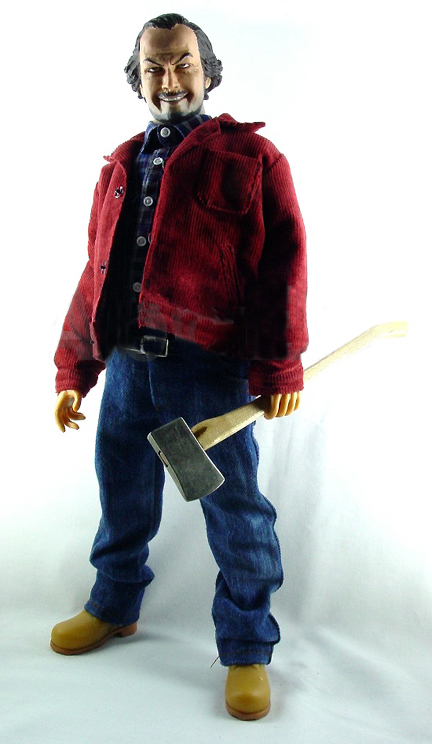
2. The boat party at the end of One Flew Over the Cuckoo's Nest -- I can't decide whether it is more or less fun to remember that this would sort of be a boozy, hooker-y party with Jack Torrance, Frank Reynolds, and Grima Wormtongue. I'd go still, though.
1. The neverending floating party from Life, the Universe, and Everything (book three of the Hitchhiker's Guide to the Galaxy)-- this has been beau ideal of an event for me ever since getting together with a bunch of people stopped being called a playdate and started being called a party. This sealed it:
One night, long ago, a band of drunken astro-engineers of the first generation clambered around the building digging this, fixing that, banging very hard on the other, and when the sun rose the following morning it was startled to find itself shining on a building full of happy drunken people that was now floating like a young and uncertain bird over the treetops.
That party, in the book, is on its third or fourth generation and shows no sign of stopping, so, you know, there may be time for me yet.
5. Pnin's Faculty Party -- just because I feel for the guy. I want to stay at his house once it's over, and at the very end of that chapter yell "your glass isn't broken!" before he has to suffer.
4. A Gatsby party of some sort -- you've got to have at least one of those. When I was little and my big ambition was to be a fiction writer instead of a blogger, I tried writing a story about one of the first Gatsby parties. You've got to figure they were lame, right? By the time Nick shows up, the man is a legend, who floats around looking out across the harbor and being Mysterious. In my story, Gatsby sits around talking himself up to no one but Klipspringer, and they eat an awful lot of citrus that he had meant to garnish a lot of drinks with. Those are the ones I want to be at -- get in on the ground floor.

3. The party at the lying-in hospital in the Oxen of the Sun chapter of Ulysses -- yeah, I made fun of that chapter the other day, but who cares. The main reason I'd want to go is that Buck Mulligan is there, being ridiculous, claiming as soon as he shows up (at a maternity ward, mind you) that "it grieved him plaguily to see the nuptial couch defrauded of its purest pledges" and that he will try to combat this by offering, free of charge, his services as a fertiliser and incubator. And, at the end of the party, when they head out into Dublin, we get this:"The air without is impregnated with raindew moisture, life essence celestial, glistening on Dublin stone there under starshiny coelum." If that isn't a description of a night that makes you want to find the next party, I don't know what is.
2. The boat party at the end of One Flew Over the Cuckoo's Nest -- I can't decide whether it is more or less fun to remember that this would sort of be a boozy, hooker-y party with Jack Torrance, Frank Reynolds, and Grima Wormtongue. I'd go still, though.
1. The neverending floating party from Life, the Universe, and Everything (book three of the Hitchhiker's Guide to the Galaxy)-- this has been beau ideal of an event for me ever since getting together with a bunch of people stopped being called a playdate and started being called a party. This sealed it:
One night, long ago, a band of drunken astro-engineers of the first generation clambered around the building digging this, fixing that, banging very hard on the other, and when the sun rose the following morning it was startled to find itself shining on a building full of happy drunken people that was now floating like a young and uncertain bird over the treetops.
That party, in the book, is on its third or fourth generation and shows no sign of stopping, so, you know, there may be time for me yet.
Subscribe to:
Posts (Atom)