Every New Year's my Uncle Paul names the year that's going to happen. For the first few years this millennium, it was Body 2000, then Body 2001, and so on. Then it was 2004: It's All Coming Together, which was really the rightest one because that year his family gained a cute daughter, and the Red Sox won the World Series and the Patriots won the Super Bowl, which got Uncle Paul all amped up. Since then it's been things like 2006: Nice One and 2008: This Year We Play For Keeps. Anyway, the thing is that the little manifesti that Uncle Paul announced to go along with the year names were usually only partially achieved. Like all named things, the years since 2000 have been in some way a disappointment. And even so with the dead horse I'm going to here kick, my Summer of Adventures without Underlining.
That, the lonelier of you will recall, is what I meant to do last summer in order to save money and learn things: since I didn't expect them to have a lot of finely tuned phrases (no "(picnic, lightning)"s to scribble under), I could forgo underlining nonfiction books. And because I didn't have to write in these books, I could get them at the library (cheap!). And then, as you know from my reporting on the epic battle of me vs. Garbage Land by Elizabeth Royte, the best laid plans &c. But! I have been secretly sticking with it, to surprise you! On a day just such as this! With the news that I have kept up low-level commitment to nonfiction books, and, for an inveterate fiction snob like yrs truly, it has been going ok.
Of books I wanted to read, I am not doing so hot. I've only read one, the Nine by Jeffrey Toobin, but that is the one about which I want to talk to you today. The Nine was a very good book, and had a lot to say about the Supreme Court under William Rehnquist, and some sharp things to say about where the court is headed now. That said, the only thing that really stuck with me about the book (apart from a few zingers from Scalia) was that David Souter eats an apple for lunch every day -- and eats the core, too. That blew me away. Did his parents teach him, in harsh New Hampshire winters, that no part of the apple should go to waste? And did their parents? Or did Justice Souter just decide one day, enough is enough, I'm eating this whole apple? This was the main thing I took away from this sharply written, thoroughly researched book about one of the three most important bodies in the United States. That probably means something.
Anyway now I'm reading the Dark Side by Jane Mayer, which is good. On the lunch front, all I've seen so far is that David Addington, Cheney's chief of staff, ate gazpacho for lunch everyday by himself. That seems to be sadly humanizing, but doesn't hold a candle to Justice Souter's bravura, philosophy-encapsulating lunches. More on nonfiction next week, and a list later today!
Thursday, January 15, 2009

This Week in Thinking Too Much About Shakespeare
So, I took my show on the road this weekend, hoping to knock off some books. You will remember, from your slavish devotion to this website, that I am trying to pack in the ol' library a little, by means of reading some of these freaking books before buying more. It has gotten to the embarrassing point. When I meet women in bars, I am sick of the sheepishness with which I have to say, on presenting them with the wallet-sized photo of my bookshelves in my wallet, "Well, you know actually, I haven't read all of them...no, actually, I haven't really read about that, er, third in the middle". My dad doesn't impress patients with a bunch of diplomas on his office wall that he's thinking about getting. So anyway: trip to New York, booklight, big hopes about finishing Jane Mayer's the Dark Side, Ben Jonson's the Alchemist, and maybe putting a dent in Rabelais and his World. Way-ell, that is not what happened. Rather, I read thirty pages of the Dark Side, none of anything else, and wound up with a net gain of like 1000 pages on my increasingly onerous spreadsheet of pages left to conquer.
Part of this was not my fault (Christmas, magnanimity). Part of it was (outright theft). Happily, none of it was books bought, so at least I am doing ok in the "Don't Buy Books" part of my resolutions for a better life. I was not (imaginarily) peer pressured into buying these 1000 pages by cute booksellers; I did not do any mental gymnastics to convince myself things like, "If I didn't think I was supposed to tend bar on a particular day, but then did, the money made that day is free money and thus can be spent on books." But I got more books, nonetheless. I feel like Lyra Belacqua, and book pages are dust. Just unavoidable, given who I and what they are. So what am I going to do?
On the drive home from this eye-opening trip to New York, I did what you've been waiting for me to do ever since I called this feature what it's called, and I thought about Shakespeare. Specifically I thought about this:
...But this rough magic
I here abjure, and, when I have required,
Some heavenly music, which even now I do
To work mine end upon their senses that
This airy charm is for, I'll break my staff,
Bury it certain fathoms in the earth,
And deeper than did ever plummet sound,
I'll drown my book.
(I love that he's going to bury his broken staff "certain fathoms" in the earth; not five or a few, but "certain".) That's right: I thought about, deeper than ever did plummet sound, drowning my books. Getting rid of 'em, something. But that seems like such a throwing-one's-hands-up-in-resignation thing to do. Prospero, shortly after this announcement, claims further that in Naples, in his post-libricide life, every third thought will be his grave. Unpleasant! So here's what I am going to do. I am going to view that spreadsheet as onerous no longer. It's not a list of books I haven't read, but a list of books that I have thought about having had read. Subjunctivity will save my face again. What a happy day! Also, I'm going to tell my dad what the hell, go ahead and throw that MA in Architecture he's always fantasized about right up on his wall.
Part of this was not my fault (Christmas, magnanimity). Part of it was (outright theft). Happily, none of it was books bought, so at least I am doing ok in the "Don't Buy Books" part of my resolutions for a better life. I was not (imaginarily) peer pressured into buying these 1000 pages by cute booksellers; I did not do any mental gymnastics to convince myself things like, "If I didn't think I was supposed to tend bar on a particular day, but then did, the money made that day is free money and thus can be spent on books." But I got more books, nonetheless. I feel like Lyra Belacqua, and book pages are dust. Just unavoidable, given who I and what they are. So what am I going to do?

On the drive home from this eye-opening trip to New York, I did what you've been waiting for me to do ever since I called this feature what it's called, and I thought about Shakespeare. Specifically I thought about this:
...But this rough magic
I here abjure, and, when I have required,
Some heavenly music, which even now I do
To work mine end upon their senses that
This airy charm is for, I'll break my staff,
Bury it certain fathoms in the earth,
And deeper than did ever plummet sound,
I'll drown my book.
(I love that he's going to bury his broken staff "certain fathoms" in the earth; not five or a few, but "certain".) That's right: I thought about, deeper than ever did plummet sound, drowning my books. Getting rid of 'em, something. But that seems like such a throwing-one's-hands-up-in-resignation thing to do. Prospero, shortly after this announcement, claims further that in Naples, in his post-libricide life, every third thought will be his grave. Unpleasant! So here's what I am going to do. I am going to view that spreadsheet as onerous no longer. It's not a list of books I haven't read, but a list of books that I have thought about having had read. Subjunctivity will save my face again. What a happy day! Also, I'm going to tell my dad what the hell, go ahead and throw that MA in Architecture he's always fantasized about right up on his wall.
Tuesday, January 13, 2009
Los Detectivos Salvajes: (Upside Down Exclamation Point)Primera Vista!
So what's going on in the Book Club Book, you ask, having remembered that it is Roberto Bolano's the Savage Detectives, translated into English by Natasha Wimmer? Not a lot. As far as I know, I and Blood are reading it actively, and we have slight commitments from the Dudebrodawgman's father, which is good, but anyway here comes a CAVALCADE OF SPOILERS so sit back.
I'm 140 or so pages into the book, which has been narrated by a guy named Juan Garcia Madero, who is usually called by his friends the Poet Garcia Madero. i do not want to hang out with the Poet Garcia Madero, but that's ok, because he is about to be relieved of narrative duties. What will continue, I know from reviews, is a bunch of different narrators will take over and slowly tell us more and more about the Main Event of this novel, the chief visceral realists, Ulises Lima and Arturo Belano. Even if you hadn't read the reviews, you would know that these guys are ones on whom to keep an eye, given that a) they always show up as a unit and b) the latter guy has a name that looks a whole lot like Roberto Bolano's name. This is maybe one of the few times I have wondered why a writer would throw such an obvious reminder of himself into a text and come up with an almost immediate answer: in a book in which the most important people are only seen peripherally, it's a heck of an effective way to get us to remember that he's important. And that might make Ulises Lima and Arturo Belano the coolest people I've ever seen in a piece of writing.
They show up occasionally in Garcia Madero's diary, which is more about women that he has slept with. The bounce in and out, usually making oracular claims like that the visceral realists walk "backward, gazing at a point in the distance, but moving away from it, walking straight toward the unknown." Garcia Madero:
I said I thought this sounded like the perfect way to walk. The truth was I had no idea what he was talking about. If you stop and think about it, it's no way to walk at all.
Too true, pedestrian Garcia Madero. And that's the whole point of these guys: marked with his author's name, Arturo Belano and his friend maintain their haunting, outrageously cool auras, models of coolness cooler than real people, or even real head-on characters in a novel could ever be. They are just too cool. Do you guys think so? I mean, every time I read about them much I want to grab one and maybe two friends of mine and move somewhere -- Vancouver, Tucson, Buenos Aires, anywhere far away -- and sit on curbs and smoke Camels and talk about books. It was brought to my attention that that was just what I wanted to do all of the time, which is not true, because as you know, some other non-book stimuli make me want to be drunk, rather than talking about books in Tucson. I am intrigued to see whether or not Bolano can keep this up; throughout the rest of this long book, whether or not is possible for mystique to be sustained for so long. Also, can people maintain being this cool while being way into poetry? Brian Blood says no. Next time I talk about the Savage Detectives, one of these days, I will tell you about the poetry angle that Blood finds so silly. Til then, patriots.
Monday, January 12, 2009
The Book Review Review
Let's take a look at this Sunday Book Review, shall we? Frankly, when I first looked it over, I decided it looked a little boring so I read the whole thing while listening, over and over, to the whistle intro to "Patience" by Guns n Roses. So, uh, bear that in mind.
The big ticket reviews are a new novel about a guy who wishes he were a bird, a "no really, he wasn't that bad" book about William Randolph Hearst, and a bunch of letters from Allen Ginsberg. The latter made me wonder how much I will have to be interested in a writer to want to read his or her letters. I think someone should make a Best of Letters book. I would read that, and then know whose letters were worth pursuing. Same with journals. Get on this, Penguin.
Then we had the Roundups, which I read this week: a crime writing roundup, and a children's books roundup. The angle on the children's books were that they had to be about math. Here's what I thought about the crime roundup: everyone's worried about slim pickings available for long form journalism, and afraid that the Atlantic and the New Yorker are not bulky enough anymore. They should make the cover of PW next week look like US Weekly and have, I dunno, Harper's looking cadaverous in a bikini: LONG FORM JOURNALISM: HOW THIN IS TOO THIN? Anyway, what about really really short form journalism? Not like twitter, but like this crime roundup, which I thought was great because it just sat down and got the job done. It has abrupt little new paragraph ledes that reminded me of Groucho's time in the announcer's booth in Horse feathers. "When did publishers get so smart about re-issuing out-of-print mysteries?" she writes, after having written about something else. That's a great cold segue. I found this tremendous. Anyway, the kids' one was good too, it did what anything about childrens' fiction in the times should do, which is made me think "I should get that for my cousins so that when they're seventeen I can remind them about what a Hip Positive Influence I was." The other thing that jumped out about the kids' roundup was this: the reviewer, Jim Holt, who wrote a book about jokes I really liked, commends one author for her bold palette, then adds in a suspiciously offhand way: "those who experience numbers coloristically (in my case, four is blue, seven is green and eight is orange) know how important this can be in making friends with them." Wait, what? Do other people experience numbers coloristically? (Komorowski, I'm looking at you for help on this one.) This was definitely the hidden highlight of my week's reading of the book review.
The essay is about kids' books too, or rather a particular new kid's book that compiles old and out of print radically leftist stories for littluns. It is a good little essay, or rather a good longish review, but not one to set the world on fire, like that glorious old one about books that were turnoffs to teh ladies. Anyway, that's all for today, a bunch more on Bolano tomorrow, PAX.
Friday, January 9, 2009
Party Party
This is the Thursday listicle, showing up on Friday because I'm lazy and because my car started leaking gas and I had to take it to the shop and then go to the gym or WHATEVER. In the future I hope to bring you more fun things on Thursdays. I have to report to you on the doings of the Mechanical Reproductionists, who are still at large and still about as much a book club as this thing, and we'll get to that Friday-proper-ish. But for today, this ersatz Thursday (and my mother's birthday!) here is a Thursday listicle, of the top parties in literature, which I would like to have attended. Bear in mind that these are the ones I would have wanted to attend, not necessarily the best or rock-out-ingest ones. Frankly, I probably would have just been resentful and sat in the corner at most of the rock-out-ingest ones, and I can do that in real life.
5. Pnin's Faculty Party -- just because I feel for the guy. I want to stay at his house once it's over, and at the very end of that chapter yell "your glass isn't broken!" before he has to suffer.
4. A Gatsby party of some sort -- you've got to have at least one of those. When I was little and my big ambition was to be a fiction writer instead of a blogger, I tried writing a story about one of the first Gatsby parties. You've got to figure they were lame, right? By the time Nick shows up, the man is a legend, who floats around looking out across the harbor and being Mysterious. In my story, Gatsby sits around talking himself up to no one but Klipspringer, and they eat an awful lot of citrus that he had meant to garnish a lot of drinks with. Those are the ones I want to be at -- get in on the ground floor.
3. The party at the lying-in hospital in the Oxen of the Sun chapter of Ulysses -- yeah, I made fun of that chapter the other day, but who cares. The main reason I'd want to go is that Buck Mulligan is there, being ridiculous, claiming as soon as he shows up (at a maternity ward, mind you) that "it grieved him plaguily to see the nuptial couch defrauded of its purest pledges" and that he will try to combat this by offering, free of charge, his services as a fertiliser and incubator. And, at the end of the party, when they head out into Dublin, we get this:"The air without is impregnated with raindew moisture, life essence celestial, glistening on Dublin stone there under starshiny coelum." If that isn't a description of a night that makes you want to find the next party, I don't know what is.
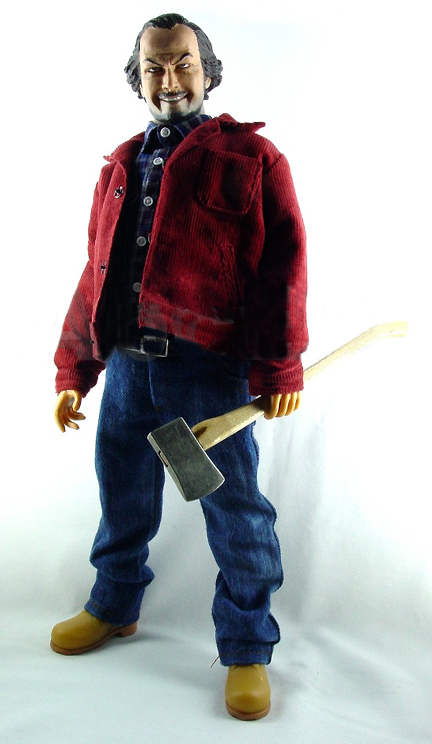
2. The boat party at the end of One Flew Over the Cuckoo's Nest -- I can't decide whether it is more or less fun to remember that this would sort of be a boozy, hooker-y party with Jack Torrance, Frank Reynolds, and Grima Wormtongue. I'd go still, though.
1. The neverending floating party from Life, the Universe, and Everything (book three of the Hitchhiker's Guide to the Galaxy)-- this has been beau ideal of an event for me ever since getting together with a bunch of people stopped being called a playdate and started being called a party. This sealed it:
One night, long ago, a band of drunken astro-engineers of the first generation clambered around the building digging this, fixing that, banging very hard on the other, and when the sun rose the following morning it was startled to find itself shining on a building full of happy drunken people that was now floating like a young and uncertain bird over the treetops.
That party, in the book, is on its third or fourth generation and shows no sign of stopping, so, you know, there may be time for me yet.
5. Pnin's Faculty Party -- just because I feel for the guy. I want to stay at his house once it's over, and at the very end of that chapter yell "your glass isn't broken!" before he has to suffer.
4. A Gatsby party of some sort -- you've got to have at least one of those. When I was little and my big ambition was to be a fiction writer instead of a blogger, I tried writing a story about one of the first Gatsby parties. You've got to figure they were lame, right? By the time Nick shows up, the man is a legend, who floats around looking out across the harbor and being Mysterious. In my story, Gatsby sits around talking himself up to no one but Klipspringer, and they eat an awful lot of citrus that he had meant to garnish a lot of drinks with. Those are the ones I want to be at -- get in on the ground floor.

3. The party at the lying-in hospital in the Oxen of the Sun chapter of Ulysses -- yeah, I made fun of that chapter the other day, but who cares. The main reason I'd want to go is that Buck Mulligan is there, being ridiculous, claiming as soon as he shows up (at a maternity ward, mind you) that "it grieved him plaguily to see the nuptial couch defrauded of its purest pledges" and that he will try to combat this by offering, free of charge, his services as a fertiliser and incubator. And, at the end of the party, when they head out into Dublin, we get this:"The air without is impregnated with raindew moisture, life essence celestial, glistening on Dublin stone there under starshiny coelum." If that isn't a description of a night that makes you want to find the next party, I don't know what is.
2. The boat party at the end of One Flew Over the Cuckoo's Nest -- I can't decide whether it is more or less fun to remember that this would sort of be a boozy, hooker-y party with Jack Torrance, Frank Reynolds, and Grima Wormtongue. I'd go still, though.
1. The neverending floating party from Life, the Universe, and Everything (book three of the Hitchhiker's Guide to the Galaxy)-- this has been beau ideal of an event for me ever since getting together with a bunch of people stopped being called a playdate and started being called a party. This sealed it:
One night, long ago, a band of drunken astro-engineers of the first generation clambered around the building digging this, fixing that, banging very hard on the other, and when the sun rose the following morning it was startled to find itself shining on a building full of happy drunken people that was now floating like a young and uncertain bird over the treetops.
That party, in the book, is on its third or fourth generation and shows no sign of stopping, so, you know, there may be time for me yet.
Wednesday, January 7, 2009
Why So Serious?
Did you know that the New Yorker has talking, animated cartoons at their website? They are exactly what you expect from talking New Yorker cartoons: there is one frame, one of the characters delivers what would, in the magazine, be the caption, and the other characters respond minimally (in the two I watched, one woman in a boardroom backed away from a guy with a hand puppet, and in the other one a slug frowned). Why does the New Yorker have cartoons, incidentally? I mean, I like them; I'm glad they are there; but in an organ of serious long form journalism, why cartoons? Wikipedia tells me that Harold Ross founded the New Yorker because his old magazine, Judge, was too corny. From what I've dug up of Judge, Ross could've included just one cartoon about cowboy slugs a week, loaded the rest with depressing Seymour Hersh articles, and handily won the New York Magazine humor battle. Anyway, the cartoons stuck around, like the poems, sort of atavistically, and now here they are, littered among more technically serious business.
So that's that in cartoon/solemnity abutment; what about cartoon/solemnity melding? Not stuff like Watchmen, which is hardly really a cartoon, but stuff like Steven Millhauser's Cat 'n' Mouse or Derek Zumsteg's Bugs Bunny, Greatest Banned Player Ever, both of which consider, very very seriously, very very frivolous things. The former takes as its object of study Tom and Jerry cartoons in general, and the latter a particular Looney Tune, "Baseball Bugs". The former performs a sort of literary analysis on the lives and motives of a cat and a mouse not unlike Tom and Jerry, and the latter performs sabermetrics on a ludicrous game of baseball played, on behalf of a collection of geriatrics, by Bugs Bunny against some thugs. What they have in common is a relentless commitment to not wink. Millhauser's story has passages like this:
This makes the cat dangerous, despite his stupidity, for the mouse recognizes that he himself has long periods when the cat fades entirely from his mind. Moreover, despite the fundamental simplicity of the cat’s nature, it remains true that the cat is cunning: he plots tirelessly against the mouse, and his ludicrous wiles require in the mouse an alert attention that he would prefer not to give.
And also passages like this:
The cigar explodes. When the smoke clears, the cat’s face is black. He gives a strained, very white smile. Many small lines appear in his teeth. The teeth crack into little pieces and fall out.
The diction is the same; the authorial attitude is the same; and yet.
Zumsteg is similar, though he keeps asking how, rather than why, the preposterous events of cartoons have come to pass. He considers Bugs Bunny's unorthodox fielding style, and has this to say:
That means that Bunny was able to cause the ball to accelerate by at least 50mph/s^2. Based on these calculations, it would seem possible for Bunny to actually fly and even to achieve escape velocity and orbit the planet using only his heckling. However, it’s important to note that as demonstrated in this game, we can only definitely establish from the footage that he is able to perform the acceleration when drawing an object to him, and only on the baseball.
There is a natural inclination to say (many of the people who commented at USS Mariner have said) that the focus of serious critical apparatus on cartoons is simply a waste of time. Really? For one thing, in neither of these cases does it seem like a waste of time relative to the most probable alternative -- say, doing literary analysis on Ralph Nickelby rather than a mouse, or doing sabermetrics on like the Seattle Pilots-- and I don't even think any of those things is really a waste of time. Another inclination would be to say that somehow it's an eiron's work to treat frivolous things like cartoons as bits of seriousness -- that it levels down, and shows as frippery our attempts to take serious things seriously -- but I don't think that's right, either. What I think is that this work is a kind of leveling up: if Bugs Bunny has merited sabermetrics, if we give the same attention to Jerry the mouse as we do to Lambert Strether, maybe that is good news too for the rest of us; maybe eventually we'll all deserve remorseless analysis.
Tuesday, January 6, 2009
This First Week in Thinking Too Much About Shakespeare
So, this is part of the New Year overhaul attempt: the Tuesday morning-ish installment of Unpacking My Library, which I have codenamed "This Week in Thinking Too Much About Shakespeare", in which I will have something to say about my adventures as a person who thinks about books, and Shakespeare in particular, more often than the other "guys seeking friendship" on Buffalo craigslist. I imagine that this series will have a lot to say about bookstores. And this installment, in fact is going to be all about bookstores, as well as The Economy, because that's what the whole internet is talking about and who am I to disagree. It doesn't actually wind up having any Shakespeare mentioned, though I did look at a few books about him at the bookstore. Maybe I could do with a better segment title? Thoughts?
Yesterday I talked to one of my friends who had recently decided that she didn't know anything about the economy, because she talked to people from Barclays and found herself conversationally adrift. Rather than sniffily call economics the dismal science and get back to Bolano, which is what I would have done, she trooped out and got Alan Greenspan's the Age of Turbulence, which is what I would have done if weren't lazy. She also bought the World without Us by Alan Weisman, about what would happen if we homo sapiens turbulent ourselves right off the planet. So, bleak. Anyway, that was yesterday.
Today, I got hustled out of bed in the EARLIEST HOURS of the morning, in order to take one of my brothers to school because the other brother had made off with his car. Being up then, with no plans for the next five hours, I decided to go to Starbucks and read, and from there I decided to go to Barnes and Noble and see what was up. It was bleak there, too: all of the holiday-fattened displays had slimmed down, and even the once proud front display, where mere weeks earlier I had seen Paul Krugman's new book about Depression economics rubbing spines with A Bold Fresh Piece of Humanity by Bill O'Reilly now was all fitness books. And not entirely new fitness books -- books that people already deludedly bought when they were going to really change their lifestyles in 2006. This was depressing: not enough books. We hear about that all the time, of course; print media is always in crisis, and why not? The number one way to deal with a print media crisis is to write about it, and that gives a lot of us something to do, and some people even something to do in print.
What struck me the most about these two days, though, was the way in which the latter undercut the former: that is, the problem that one of the ways in which people try to understand Our Troubled Times is to read books, while one of Our Time's Troubles is that books are getting sparser. I can't imagine that the kind of information that my friend sought in her books by Alans will go away (or at least not before we are in much deeper trouble than that), and I suppose that kind of faith in things to get written is something on which to hang our collective hat. But it's more troubling to think about slimmer bookstores, offering less comfort to the only recently ungroggy who go to just wander around among all that heft of words.
Of course, I could just go in my room, where there is a shit ton of books sitting around, too. So I've got options.
Subscribe to:
Posts (Atom)